ISOM vs. ERP Systems
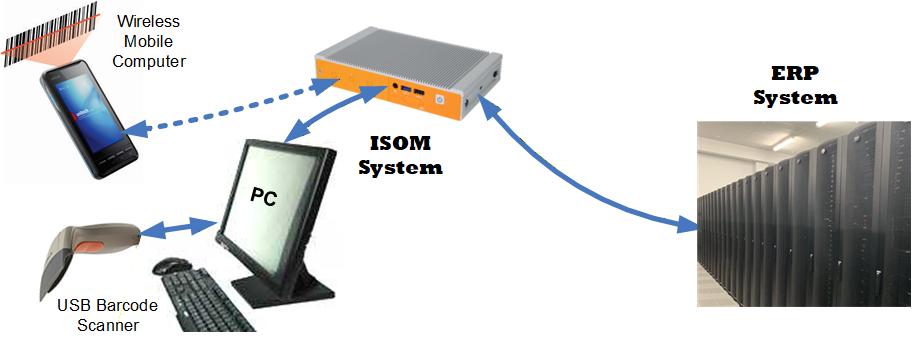
While ISOM systems are considered by some as replacements for ERP system, they in-fact have different roles.
The primary purpose of an ISOM system is to assist in managing the real-time flow of materials through make-to-order manufacturing operations and distribution
warehouses which perform secondary tasks such as repacking, assembly and kitting.
At the core of ERP systems are two sets of software: (1) finance/accounting software and (2) a materials requirements planning (MRP) algorithm for
long-run make-to-stock manufacturers. In addition, there may be human resources and customer relations management modules.
Where these ERP and ISOM systems intersect include:
- Both ERP and ISOM systems use Item Master records with both having a route of operations for making products.
- ISOM systems automatically track jobs and materials in real-time,
whereas job and materials tracking data is entered into ERP through annual keyboard data entry, typically the next day.
For this reason, ISOM systems are typically used to automatically feed real-time tracking data to ERP systems.
- ERP systems track inventory as the quantity of each item at each location. ISOM systems track containers of material.
When they are used in combination, the quantity of each item in each container are added up to get the current state of the inventory,
which is used to update the inventory in the ERP system.
- Purchase orders may be entered manually in both ERP and ISOM systems. In an ERP system they may also be generated by the MRP planning algorithm
based on planned production for stock inventory. In an ISOM system they may also be generated by intelligent agent processes based on the inflow of customer orders.
- Item Master records in an ERP system typically have a Bill of Materials (BOMs) for making the product.
In an ISOM system each step in the route has its own BOM for materials to be consumed and produced.
- ISOM systems track Work-in-Process (WIP) materials as they are consumed and produced in real-time by each work order step.
ERP systems, by contrast back-flush (reduce) the inventory quantity of raw materials in stock when finished products are shipped, based on their BOMs.
As a result, the inventory quantities in an ERP system, when used without being regularly updated from an ISOM system are always out of date.
- While ISOM systems can accurately track the actual labor, materials, and machine time cost of making each batch of products
they do not keep track of financial records nor they do the work of an accounting system, whereas an ERP system can do this.
- ERP systems handle accounting and financial issues whereas ISOM systems do not, except in determining the cost of jobs.
In summary, an ISOM system is a real-time tool for managing industrial operations while an ERP system is primarily used for historical record keeping.
The best results are achieved if both are used together.
Please click here to learn about
ISOM Technology Fusion.
Copyright © SmartOpsMgt LLC 2026